

About Blue Biobank
Why do we need biobanks?
Current threats and losses in marine biodiversity can compromise the discovery of novel molecules with potential to generate new products, processes and services. Biobanks can greatly support the bioprospecting of molecules of interest by systematically collecting, storing and managing marine biological samples.
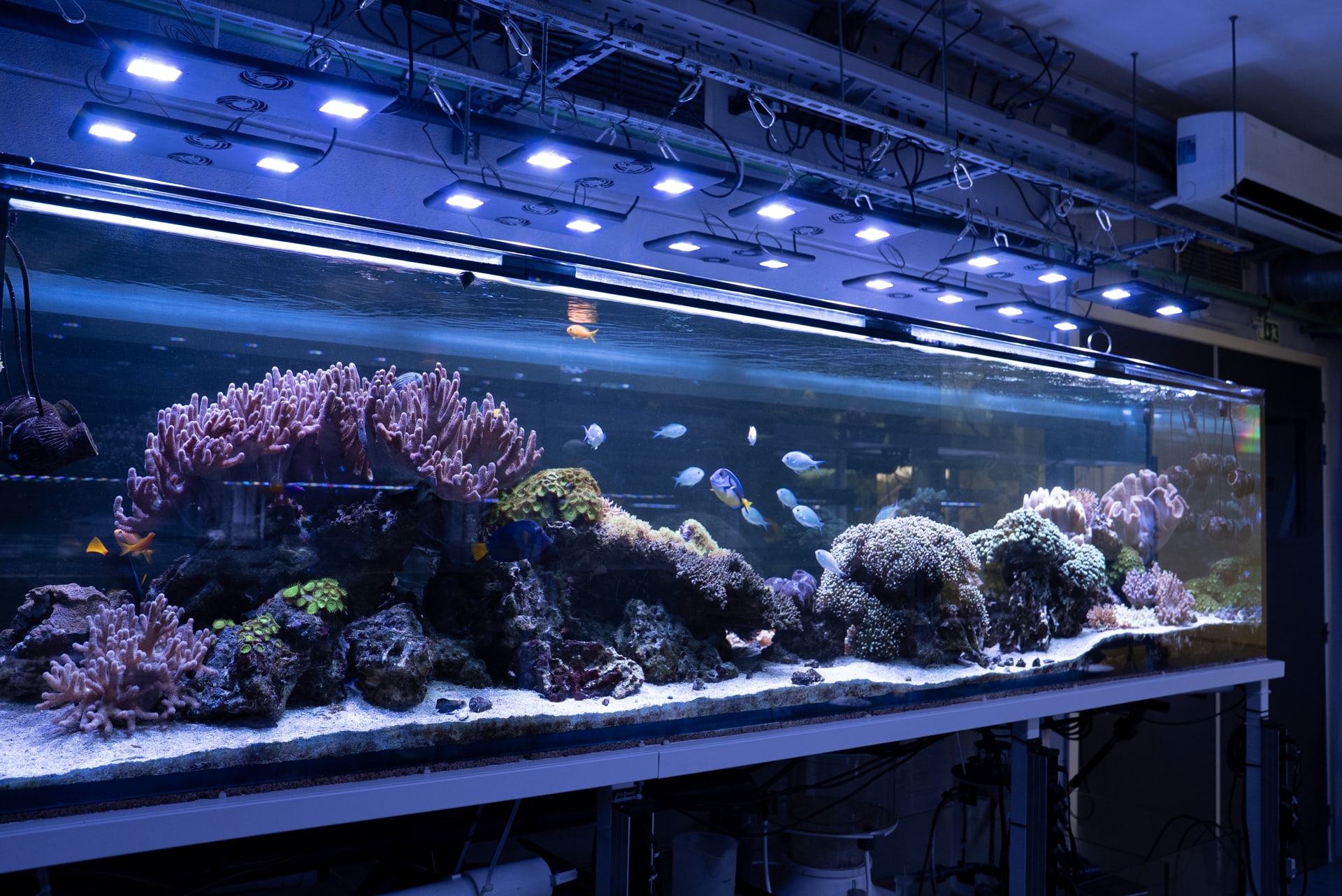
Blue Biobank of the University of Aveiro
The Blue Biobank (UA) is based at the living library of CEPAM-ECOMARE, with its life support systems and greenhouses at the University of Aveiro. It maintains seaweeds, as well as multiple marine invertebrates, with an emphasis on soft and hard coral colonies, sea anemones and sea slugs.
The facilities of Blue Biobank (UA) comprise controlled environments designed to maximise biomass production and optimise the synthesis of target metabolites. At Blue Biobank (UA), in toto aquaculture performed ex situ is also possible by culturing the host marine organism and its associated microbiome under controlled and replicable conditions, which are paramount for subsequent stages of the biodiscovery pipeline. This approach enhances replicability and avoids one of the major caveats of marine biodiscovery – loss of the source.
Blue Biobank collaborates with national and international biobanks to further promote the discovery of chemodiversity in the marine realm and overcome barriers in marine research and business.
Collect, store, and manage marine biological samples
Maintain living colonies of corals, sea anemones, seaweeds and sea slugs.
Produce samples under controlled conditions to avoid loss of the source and replicability

Project biobanks of the blue bioeconomy pact
Blue Biobank (UA) is part of the transversal project Biobanks (WP9) of the Blue Bioeconomy Pact funded by the Recovery and Resilience Plan, which aims to implement a digital network of biobanks of national marine resources to facilitate a sustainable, transparent and regulated access to Portuguese marine biodiversity.
The end goal is to support scientific research and its commercial applications. Ultimately, the biobanks promote the conservation of marine biodiversity and ensures compliance with the international Nagoya Protocol on Access to genetic resources and fair and equitable sharing of benefits derived from their use.
This project thus aims to promote the protection of national bioresources and their economic valorization both nationally and internationally. It also maps and catalogs national marine resources, increasing current knowledge of the planet’s biodiversity, as well as monitoring their use and benefit sharing.